Daily Tao / 105 – Compassion

compassionate

Once you’ve seen the face of god,
You see that same face on everyone you meet.

The true god has no face. The true Tao has no name. But we cannot identify with that until we are of a very high level of insight. Until then, the gods with faces and the Tao with names are still more worthy of veneration and study than the illusions of the world.

With long and sincere training, it is possible to see the face of god. Holiness is not about scientific objectivity. It is about a deep and clear recognition of the true nature of life. Your attitude toward your god will be different than anyone else’s god — divinity is a reflection of your own understanding. If you experience differs from others, that does not invalidate your sense of godliness. You will have no doubts after you have seen.

Knowing god is the source of compassion in our lives. We realize that our separation from others is artificial. We are neither separate from other people nor from Tao. It is only our own egotism that leads us to define ourselves as individuals. In fact, a direct experience of god is a direct experience of the utter universality of life. If we allow it to change our way of thinking, we will understand our essential oneness with all things.

How does god look? Once you see god, you will see that same face on every person you meet.

Daily Tao / 104 – Readiness

knife-sharpening

A knife keeps its edge
Only with honing and proper cutting.
A warrior’s virtue is readiness.
A sage’s virtue is awareness.

This life is so competitive and challenging that one must remain in constant readiness for the problems and conflicts that come with each day. That is why followers of Tao meld the way of the warrior and the sage. They want the courage and preparedness of the fighter, the luminous perception of the wise. Each day, they dedicate themselves to maintaining their characters and perpetuating their development. But how does one maintain one’s edge without blunting?

There is a fable about a king who was watching his butcher. He was amazed that the man could dismember a whole ox without much effort and without dulling his knife. Seeking to learn, the king questioned his servant, who said that his secret was to insert his knife only in the spaces between muscles, thus parting the body along its natural lines. In this way, where an ordinary butcher had to grind his blade daily, he only had to sharpen his knife once a year.

From this we can learn that we must first hone ourselves to a sharp edge, but the proper use of our talents is equally essential. We must remember to take action along the basic lines and seams of the day. If we do this, we can never be opposed for long.

Daily Tao / 103 – Reciprocity

reciprocity

Hands grasp, but also give.
Mouth tastes, but also speaks.
Nose breathes, but also smells.
Eyes see, but also show.
Ears hear, but also balance.

The hands teach us not to be selfish.
The mouth teaches us to give thanks in word and song.
The nose teaches us to learn from our environment.
The eyes teach us to show compassion and sincerity.

All parts of ourselves both give and receive. They function on a principle of reciprocity inherent in their very character. If our senses are so noble, shouldn’t we be as well?

The eyes of a dedicated person show an inner fortitude and charisma that the eyes of the ordinary do not. Scientifically, we know that an eye is an eye, a mere organ, yet experientially we know that the eyes are virtual windows to the soul. For us to achieve similar depth of character, we must live according to the inherent nobility of our natures. Each one of our senses is not simply an information-gathering faculty but is a channel of expression as well.


Daily Tao / 102 – Awarness

20131104-sharpen-your-insight-with-third-eye-chakra

Outer eyes
Cannot see themselves.
The inner eye
Is its own reflection

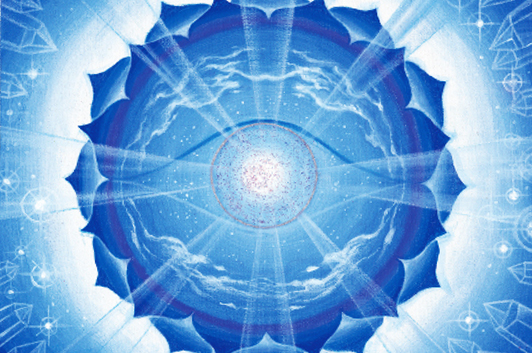
When we look we can see many things, but the eyes cannot see themselves without the help of a mirror. We are not used to introspection. Although the followers of Tao say to look within to gain self-awareness, we will be confused if we use the attitudes formed by looking with our eyes.

That is why it is important to make a clear distinction early on. Do not try to understand yourself with the attitudes of physical seeing. Look within using inner vision.

For centuries, people of many different cultures have referred to the “mind’s eye,” or the “inner eye,” or the “third eye.” These are all indications that there is a separate way of looking within. In meditation, it is important to discover and utilize this mode of introspection. We must go beyond thought, go beyond visualization, go beyond imagination and actually open a part of the mind that most people leave dormant. This inner eye has a location, buried deep in the brain. When it is opened, it is our way of receiving more subtle experiences than we receive in our physical states. Perhaps looking and seeing are misleading terms, after all. We don’t necessarily “see” images through this inner eye : We gain direct awareness that is beyond the image.

Daily Tao / 101 – Concentration

achieve-state-total-concentration1

Imagination, song, the soaring spirit.
Separate them to know them as aspects of the whole,
Join them to know the mystery of totality.

The mind, if focused, can become the most powerful force we know. Yet for most of us, we are lost in the vastness of our own uncharted minds. We play around with different aspects, find certain modes that we can get by with, and leave the rest unexplored. Those who follow Tao do not do this. They want to explore all the dimensions of the mind so that they may find a wholly integral mode of consciousness.

The primary means of exploration is through concentration of the mind. Practitioners first select an aspect and delve into it by daily focus. Only when they have fully understood do they go on. It is like studying. When you are first introduced to a subject, you must put your attention to work in order to master the knowledge. Such concentration leads to absorption, like mixing liquids together in a bottle : Once they are combined, they cannot be distinguished from one another.

With concentration, all the various aspects of the mind can be joined together into one superconscious mode. Sound is the same as sight, taste is the same as smell, touch is the same as thought, and all that we are is identical with the spiritual energy that resides within us. In this high concentration, there is complete union, and we feel the joy of total integration with all our facets.


Daily Tao / 100 – Imagination

9gag-bird-composicao-dinosours-dragon-Favim.com-289189

Imagination is pale and fragile,
Dreams grip with a false reality.
Imagination can build bridges,
Dreams can deceive.

When we dream, the experience is often deeply involving. Frightening dreams make us awake trembling and sweating. Pleasurable dreams leave us with lingering desires. Certain dreams are a form of healing, a way for our minds to recircuit and adjust themselves. No matter what, these dreams have no objective reality in our waking world.

Imagination is also a form of mental involvement. It is a way of projecting our thoughts into believable images to be contemplated and manipulated. We can play with our imagination, use it to inspire creative projects.

Both imagination and dreams are similar activities of the mind, and yet they differ in the level of conscious participation that they permit. In the case of the dream, there is a total suspension of rationality and consciousness, so there is little or no direction possible. There is no mode of control. By contrast, imagination is a tool through which we can make our lives better, different, and creative. By cooperating with it, we can achieve things that “we never dreamed possible.”

Daily Tao / 99 – Homecoming

1545

Where was Tao while I was gone?
Wasn’t I following it where I went?
Do you think that there are two?

After traveling awhile, we come home to a familiar place, only we often look at it in a new light. Were things different while we weren’t here? We experienced so many new and different things while we were gone — wasn’t that Tao too? How can there be so many differences?

You might argue that a mountain is a mountain, but our attitudes toward it are changeable. If we mistake our subjective viewpoints as something that is solid, permanent, and never relative to circumstances, then we will have no end to our problems. However, if we always remember that everything is comparative, then we can move through life in a much more dynamic way.

There are not two ways. There is only one. It is so vast that we can experience widely diverging aspects of it and imagine that we are in different realities. This is a misconception. We cannot outrun Tao, cannot be outside of it. It is only our viewpoints that change to the degree that we think we are in differing dimensions. In the river of Tao, we are like minnows that can never plumb the length and breadth of the water.


Daily Tao / 98 – Farewell

crossroad

We part at the crossroads,
You leave with your joys and problems,
I with mine. Alone, I look down the road.
Each one must walk one’s own path.

People’s paths come together all too briefly when sharing friendship, but that makes those times no less valuable. We must take advantage of support and sharing in a mutually beneficial way. Whenever we take from another, we should try to give back something. This is fundamental. No one should lean on another person, or expect another to carry them a long distance down the road. Friends should walk side by side for as long as their journey carries them, without becoming dependent on one another.

There should be no obligation. If I can help someone do something, then I should do so without any hesitation or expectation of reward or debt. If there is something that I need to learn and my companion can show it to me, then I should accept it in humility. No one “owns” knowledge. It should be freely shared.

Parting is inherent in all meeting. Nothing lasts forever. Transience is what gives life poignancy. Every person is responsible for himself or herself. There is no road to walk but your own

Daly Tao / 97 – Encouragement

away-from-home

One thousand miles from home,
I open the same prayer book.
Some nights it was only obligation;
Tonight, it is comfort.

It’s best to be patient and persevering. Devotion may sometimes seem to be pure drudgery. Away from home, it’s possible to gain a new outlook. Taken from its usual context, our commitment can stand out all the more brilliantly. Something that may have become like a bit and bridle may now be warm and comforting. That is why one should master one’s emotions, and use discipline to even out the ups and downs of impulse.

When traveling, we are away from our usual surroundings, including those elements that suppress and restrict us. Nearly all of us have fears, frustrations, and inhibitions that we have acquired in the past; time and distance help us to assess them more clearly. To overcome them takes courage and initiative. How can we do it if our very problem is fear and timidity? That is when we need a friend to help and encourage us. They can give us the guidance and support to face our fears. Although they can neither live our lives nor solve our problems outright, they can provide an invaluable presence just when we most need it.

Within ourselves, our daily devotions are the way to encourage ourselves to persevere. With others, encouragement is the way to be compassionate.


Daily Tao / 96 – Constancy

http://yellowcaseartist.deviantart.com/art/tree-branch-silhouette-150623670

Clear sunlight on falling snow: fire and ice.
Bare-boned trees stark to the horizon,
Cold marshes, havens to ducks and geese.
A groundhog sits motionless on a post.

Wherever we are, the constant flow of Tao is ever present. We see the cycle of opposites, such as the juxtaposition of sunlight and snow. We notice the ongoing rhythms of life : waterfowl carrying on their lives even as spring is slow to warm and leafless trees stand in anticipation of warmer weather. All things change, all things move constantly. The world is like the ongoing turning of a magnificent wheel. All things come in their own time.

Just as a groundhog sits motionless in the moving of the seasons, so too should we look within and slowly absorb the time. Within all the movement, the groundhog takes time to be still. Within all the changing of spring, we must take time to notice the constancy of inner devotion.

No matter how much is going on outside of oneself, one still reaffirms what is in one’s heart, taking comfort in the regular pulse. What works in the shelter of home or temple works everywhere. Only when we know such constancy will be know that our quest is succeeding.