Daily Tao / 321 – Self-Sufficiency

self_sufficient_

Be self-sufficient but not isolated.
When the king of China closed the borders,
Centuries of stagnation and decadence began.

All the philosophy of Tao is intended to lead to self-sufficiency. Whatever one needs to do in life, one should be able to do on one’s own. Whether one is trapped in the wilderness or whether one is dealing with a social gathering requiring etiquette and grace, one should be able to cope with aplomb and ease.

Being self-sufficient is not the same as being isolated. This is a very important point. When the king of China closed the borders, the country was self-sufficient enough to enjoy the isolation very well. The entire nation withdrew into a magic contentment. But eventually an inbred society developed. Stagnation and decay set in.

The same problems can arise in people who are so self-sufficient that they fail to engage life fully. Either they will implode from the sheer weight of their own decadence and stagnation, or they will explode once the outside world confronts them with something they cannot comprehend.

Those who follow Tao roam the world. They may avail themselves of the temporary advantages of withdrawal and intense self-cultivation, but they do not become permanently isolated. They flow with the Tao, are with all things, and therefore avoid decadence.
Daily Tao / 320 – Poor

Life-of-Poor-People-in-China-17

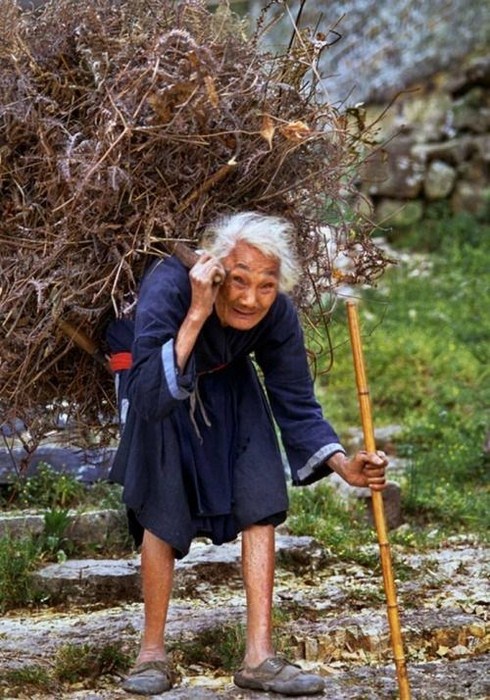
Chopsticks made from bamboo —
Too poor to afford silverware.
Tender bamboo shoots for food —
Too poor to afford meat.

Why were people of old so integrated with their surroundings? Because the objects that they used, the food that they ate, and the activities that they engaged in were straight from their surroundings. They used sticks made from bamboo as eating implements. They used vines to make baskets. They used gourds as vessels. For food, they grew plants, domesticated animals, and caught fish and game. Their social structure was built around the cycles of the sun, moon, and stars. Newborn babies were washed with the waters of the nearest stream. The dead were buried in the same earth that provided sustenance.

Now our food is imported from distant places and elaborately processed. We have no idea where objects we purchase come from, thinking that their presence and convenience is all that is necessary. We have means of transport that can bring us to places faster than our minds can adjust. We abuse our wealth and use it to insulate ourselves from our surroundings.

That’s why being of modest means is not necessarily bad. When one is poor, one is forced to use what is at hand. It is Tao that brings us these things. The closer we can be to the earth and to nature, the more integrated with life we shall be. Followers of Tao never complain about feeling alienated from life : They have no choice. Their every action keeps them synchronized with the movement of Tao.

Daily Tao / 319 – Susatining

1339437802T1gey0

Orange and gold carp,
Living beneath ice.
Uncaring of the world above,
Sustained by the water below.

In the rapidly chilling autumn, ponds begin to ice over. The waters become deep, dark, and mysterious, but in those depths the fish can survive the coming winter.

Tao may be known as directly as water is knowable to a fish. My Tao will not be the same as your Tao. We are both individuals, with different backgrounds and thoughts. As soon as Tao enters into us, it takes on the colors of our inner personalities. When it passes out of us, it returns again to its universal nature. This is an ongoing and constant process, like water flowing through a fish’s gills. Just as the water nurtures the fish, so too does Tao nurture and sustain us. As long as we continue our immersion in Tao, we will be as safe as a carp in water. When we separate from Tao, we are as helpless as a fish out of water.

Daily Tao / 318 – Singing

singing-bird

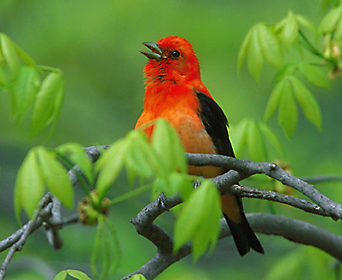
Rain comes, and birds —
Silhouettes against the pearlescent sky —
Respond excitedly in song.
They open their throats to heaven’s nectar,
And rhyme with the drops.

All of nature is song. Sometimes the song is in a minor key, with purple tones that stir the soul, bursting the heart with pent-up emotions. Sometimes it is joyous, full of rich melodies and grand chords that bring electric thrills. Sometimes it descends into strange modes, guttural chants, and obscure dissonances. It is up to each of us to sing as we feel moved by the overall song of life. Do we harmonize with it? Do we sing a counterpoint? Do we purposefully sound discordant tones?

Perhaps a student first encountering Tao endeavors to harmonize with it, but that isn’t all that there is to having a relationship with Tao. Tao gives us the background, the broad circumstances. It is up to us to fit into it, go against it, or even flutter off on oblique angles. Don’t look at Tao as one big inexorable stream in which we float like dead logs. What could that lead to except logjams?

No, let us be like the birds. Who sing when Tao sends them rain. Who know what to do when winter comes. Who embroider the sky with their own unique paths. Who will sing a counterpoint when they need to. Who will sing poetry that is discordant when it must be and rhymes when it is proper.

Daily Tao / 317 – Swimmer

underwater_swimmer

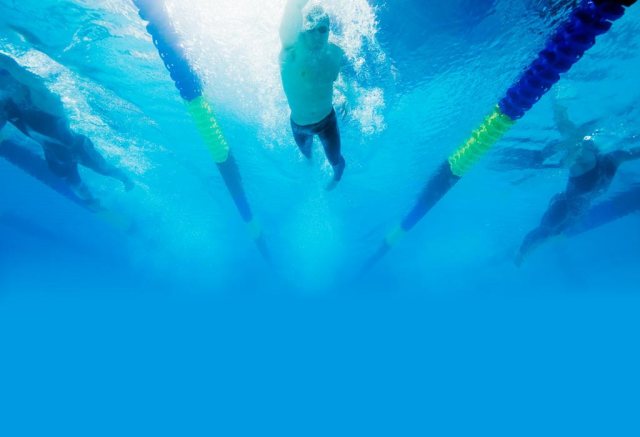
Though life is a dream,
Act as if it isn’t.
Act with no weight.

You may understand that life is but a dream, but that doesn’t free you from the responsibility to act. This dream may not be of your own making, but you must still engage it and operate within the parameters of the fantasy. You must become the producer, director, and actor of a phantasmic stage play. Otherwise, you are aimlessly adrift.

Meditating is to wake up. Few of us have acquired the skill to be in constant meditation. Therefore, we awake and dream, awake and dream. The moments of enlightenment are like the times when swimmers come up for air. They gain a breath of life, but they must submerge once again. We are all swimmers on the sea of sorrow, bobbing up and down until our final liberation.

The initial difficulty of spirituality is a schizophrenia between true understanding and the sorrow of everyday life. Our enlightenment clashes with the outer impurities. That is why some novitiates withdraw into isolation. Once people gain true spiritual insight, they dispense with this split. They can live in this world and yet not be stained by it. They are the strongest and most serene swimmers of all. They act, and yet they barely disturb the water. Their actions are outwardly no different from ordinary actions, but they leave no wake.

Daily Tao / 316 – Rest

gogh.rest-work

The year’s end is coming;
I feel great contentment.
Completion means rest.
Rest means renewal.
Renewal means new beginnings.

Perseverance is a great virtue, but perseverance cannot be cultivated without endings. Perseverance does not mean an endless engagement is Sisyphean tasks. It means beginnings, middles, and ends, and then starting over again. We are nearing the end of our year, but we could not contemplate this ending without having gone through the completions of all the days and months that have come before.

It’s good to look toward the end of things. Not only does it provide perspective, but it also provides the stepping-stone to our next endeavor. When things end, it should ideally mean the attainment of our goals. We should start everything with a definite goal in mind; otherwise our lives will lack purpose. Once we attain our goals, we should be glad and rest. We need the time for our psyches to absorb the significance of our acts. With rest comes renewal, and with renewal we can build the force of our characters and thereby stand stronger for our futures.

In the countryside farmers frequently nap in their carts of hay as their mules automatically take them back home. They know how to make achievements and rest at the same time!

Daily Tao / 315 – Joy

A_smile_a_day_keeps_the_pain_and_the_doctor_away

Do your devotions make you happy?
Is your life a joyous song?

In all this talk about spiritual devotion, there is one simple fact. You have to like it. It should make you happy. It is unfortunate that so much coercion, unhappiness, bitterness, guilt, and fear become wrapped up in spirituality. Why can’t we simply do things out of joy?

Practicing spirituality isn’t a matter of drudgery. It isn’t a matter of fear. It isn’t for fitting into a social group. It has nothing to do with status. Being devoted to holiness in your life is a matter of joy and celebration. When you sit down to meditate, a smile should come to your lips and a feeling of joy should permeate your body. When you go to consecrated ground to give thanks and celebrate, you should do so not because of the day of the week or out of the habit of ritual, but because this is the best way that you know how to adore your gods and express the wonder of being on this earth.

Yes, yes, there is much unhappiness in this existence. That unhappiness is part of the overall field of negativity. There are also positive things in life, and spirituality is foremost among them. So whenever we practice our spiritual devotions, let is be in gladness and joy.

Daily Tao / 314 – Soaring

soaring_ocean_from_wave_1_web

For years, I’ve practiced ritual.
It’s dead now.
For years, I’ve practiced meditation.
It’s dull now.
Finally, there is only soaring
Like an ectoplasmic ribbon
Floating over the sea.

When one is mature spiritually, one no longer needs the structure of ritual or formal meditations. This is not to say that structure was unnecessary, for without it one could not stand at this vantage point. But once one attains a level where one has completely internalized the lessons of structure, one can freely improvise in fresh and valid forms.

In spirituality, one can soar, free of ordinary restrictions. Imagine yourself on a high cliff overlooking the ocean. Slowly your body elongates like a ribbon. Longer and longer, undulating up into the sky. Before you is the limitless vastness of the ocean and sky. You feel drawn forward, and you can glide and soar over that expanse like a ribbon. That is spiritual freedom.

Autumn is about to pass into winter. Spring is on the other side, just as spiritual soaring is on the other side of stiff ritual. Devotions have their own seasons. When you first learn them, they are magical. Then they yield their harvest and wither. On the other side of the withering is a new spring and a new spiritual vista. Wherever you are in your spiritual years, cooperate with the cycle of the seasons, until you emerge like a dragon, soaring in the sky.

Daily Tao / 313 – Chameleon

liu_bolin_3

If I don’t want to be known, I cannot be known.
The best actor can divide role from self.
The best liar can divide truth from falsity.

People think that they know you. Soon you begin to play the role that they place on you. Why should you act a certain way to please others? You should do things from your inner awareness and from your own feelings. If they do not accord with the herd, then so much the better.

You should change when it pleases you. Your life is flexible. If you let other people shape you, then you will never know independence.

The sages say that all life is illusory, and they usually lament this. The way of Tao is to use this fact and not let it oppress you. If you want to dodge others, then step behind one of the myriad illusions in this world. If you do not volunteer anything and you neither confirm nor deny, the opinions of others can never stick to you. Then you will be left in peace.

True sages never go by appearances. When it comes to introspection, they are not deceived by the appearances their own minds spew out. They know that if they want to get at the truth, then they must pierce to the very core.

So if you would hide from others, avail yourself of the false appearances of life. If you would know yourself, distinguish between the false appearances of life. Above all, do not be put off by the illusory nature of life. Use it. Everything in this life can be an advantage to the wise.

Daily Tao / 312 – Bravery

$(KGrHqF,!p8E-61iFZtyBQFYuGLNnw~~60_35

One willing to take his own life into his hands
Will not hesitate to take the lives of others.

There were once two friends hiking in the mountains. One was a poet, the other was a statesman. They came to a deep ravine, and at the bottom were roaring rapids with a narrow plank bridge spanning the gap.

“Let’s climb down and write our names on the other side,” suggested the statesman. The poet refused. So the statesman went bravely down, crossed the bridge, and wrote their names in beautiful calligraphy. Then he climbed back up.

“Someday you will murder a man,” predicted the poet.

“Why do you say that?” exclaimed his companion.

“Those who will take their own lives into their hands will not hesitate to take the lives of others.”

Beware the brave man. He may be a hero, willing to risk his very life, but he will also be willing to endanger the lives of others. After all, he is a risk taker and therefore does not see the wisdom in conservation, compassion, and carefulness. Such a person will threaten others, force his will upon others, and even murder others not out of passion but out of something much more deadly — rationale. He will justify his actions according to ideology, patriotism, religion, and principle.

When attacked, a brave man goes forth with strength, power, and confidence. In that boisterousness, there is little awareness of the subtle. Life is not simple, and it takes a great deal of time to master. Perhaps that is why the brave are youthful while the wise are old.