Daily Tao / 229 – Redemption

Children-of-the-Mind-2

I meditate daily before the altar,
Yet I am still covered with sin.

In spite of daily efforts to improve ourselves, we still have many faults. We eliminate one, only to find new shortcomings. We free ourselves from some unwanted involvement, only to find new entanglements. Why is it so hard to find liberation? Because our own minds are the source of our difficulties.

Each one of us who has intelligence and ambition has profound desire. We want things. We devise strategies to get them. Whether it is the nearly instinctive drive for food or whether it is desire clothed in societal approval, our minds never rest in their hunger for satisfaction. Once we have desire, we grasp for the object of our desire. If the grasping is unsuccessful, we become angry, frustrated, and disappointed. If we get what we want, we only want more.

This grasping never ends. Though we meditate, we cannot eliminate this habit all at once. Therefore, though we may sit with all sincerity before the altar, we must also accept that we will not be quickly redeemed. The follower of Tao knows how to eliminate desire, accept personal shortcomings, and work toward a patient elimination of the mind’s own hunger for outward satisfaction.
Daily Tao / 228 – Depth

wave

Morning light illuminates the meditating wrestler.
In his mind, even a wooden temple is washed away.
Who could challenge an ocean’s depth?

There once was a wrestler who, in spite of his great physical stature, lost most of his matches. He consulted coach after coach, but no one could show him how to win. Although he lacked neither might nor skill, he did lack concentration and confidence.

Finally, he went to consult a meditation master who agreed to help. “Your name means ‘Vast Ocean,'” observed the master. “Therefore, I will give you this meditation to practice.”

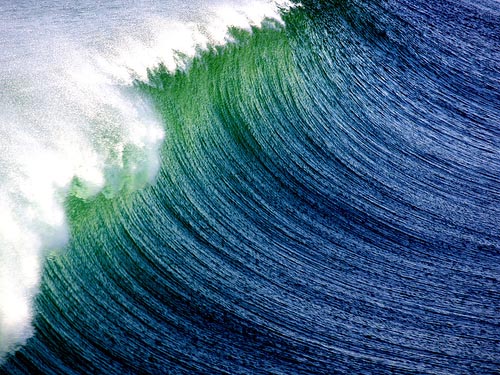
That night, the wrestler sat alone in the shrine and first visualized himself as waves. Gradually, the waves increased in size. Soon, he became a flood. Then the flood became a deluge, and finally a tidal wave. In his mind, everything was swept before him : Even the gods on the altar and the timbers of the temple were consumed in his surge.

Near dawn, the water settled into a vast and endless sea. That morning, the master came to check on the wrestler’s progress and was delighted. He knew that the wrestler would not lose again.

For each of us, it is only depth of character that determines the profundity with which we face life. We can either add to our character each day, or we can fritter away our energies in distractions. Those who learn how to accumulate character each day achieve a depth that cannot be successfully opposed.

Daily Tao / 227 – Consistency

6a00d83451e06f69e200e54f7db1128834-800wi

Without too much trouble,
One can keep to the main road.
But people love to be distracted,
And perspective is difficult.

People constantly declare that they want to walk the road of Tao. They say that all they want is to reach realization. But this is not true. If it were, they would simply walk their road and attain enlightenment right away.

Instant realization doesn’t happen very often because people become distracted. It is not given to every person to pursue Tao with the utmost consistency. Not every one even wants immediate realization. When enlightenment comes, the world becomes completely insignificant. Some of us still want to explore, be involved, amuse ourselves. That is all right, as long as you know that you are making up games and intrigues. In the final analysis, it is all right to be sidetracked a little bit, but one must always be cautious and come back to the main road without losing too much time or ground.

That is why a strong perspective is at the root of wisdom. One who follows Tao may appear to be going away from the goal, but such a person knows exactly when to pull back.

Daily Tao / 226 – Repetition

681x454

My prayer beads are strung on my life span.
I am not allowed to skip a single bead :
Sometimes the bead is a seed. Or a bone.
Or jade. Or dry blood. Or semen. Or crystal.
Or rotted wood. Or a sage’s relic. Or gold.
Or glass. Or a prism. Or iron. Or clay.
Or an eye. Or an egg. Or dung. Or a ball.
Or a stone. Or a peach. Or a bullet.
Or a bubble. Or lead. Or pure light.
No matter what the next bead is, I must count it,
Perform my daily austerities.
Repeat. Repeat. Repeat.
Until repetition becomes endurance.

People seldom understand the power of repetition. What is repeated over and over again can become enduring; what is done in a moment is seldom lasting. If farmers do not tend to their fields every day, they cannot expect a harvest. The same is true of spiritual practice. It is not the grand declaration or the colorful initiation that means anything. It is the ongoing, daily living of a spiritual life that has meaning. Our progress may range from dull to spectacular, but we must accept both. Each and every day should be linked together, strung into a long line of prayer beads.

In life, you don’t know how many beads you’ve counted already, and you don’t know how many are yet to come. All that matters is fingering the one that comes to you now and taking the spiritual significance of that moment to heart.

Daily Tao / 225 – Prejudice

Screen Shot 2013-08-11 at 1.13.09 PM


No mother thinks her child ugly.
No one is indifferent to themselves.

We are all familiar with prejudice. It comes in many forms : nationalism, chauvinism, provincialism, racism. Many of us undoubtedly cry out against these injustices. As long as there is prejudice, we declare, we are never able to fairly know one another.

And yet, it is exactly a type of prejudice that also keeps us from knowing ourselves. If we think about it, we ourselves are the ones we most favor. We cater to all our bodily needs, our sensual indulgences, our intellectual curiosities, and our lustful ambitions. When we are sick or disadvantaged, no one feels our pain more or wails more loudly. When we are satisfied, no one rejoices with greater satisfaction. When we are on the verge of death, no one clings with such vehemence.

As long as we are slaves to our appetites, then we cannot have the attention for spirituality. As long as we value comfort over effort, then we shall never have the fortitude for a spiritual quest. As long as we adhere to intellectual ideas over experience, then we can never have a genuine perception of Tao. As long as we insist that we are separate, individual entities apart from the rest of the universe, then we shall never realize oneness.

No mother thinks her child ugly, because that child is her own creation. In the same way, we are inevitably partial to ourselves : We create ourselves. If we are to reach any sort of spiritual realization, we must confront and resolve this prejudice.

Daily Tao / 224 – Indifference

dirt_throne_by_stonedinc-d3csi48

For a true master,
Sitting on a throne
Is no different than
Sitting on dirt.

A true master is indifferent to the ways of society. Ambition, knowledge, and religion are equally uninteresting. Why? Because all these things are in the realm of human definition.

The holy person transcends all identity. Therefore, wealth or poverty, good or bad, violence or peace makes no difference. Dichotomies are no longer valid to such a person.

Do you find this hard to believe? The degree that you find this difficult to accept indicates the degree to which you are shackled by dualism. True enlightenment comes from understanding the oneness of all reality. Such a realization leads to a perception that all things are truly equal. A master sees nutrition and disease as the same, life and death as the same, morality and immorality as the same. If you give the masters something to eat, they will eat. If they have nothing to eat, they forget that there ever was such an activity. There is no polarity in their lives.

We ordinary people cannot do this. We make distinctions, defend ourselves and our territories. We feel safe only inside declared boundaries. This is the way we define ourselves, but our identities are also our prisons. Only a master knows the meaning of liberation and has complete freedom.

Daily Tao / 223 – Charlatans

2

He sits on a throne with smug confidence.
Skin in bright gold, eyes are reptilian marbles.
Lips are smeared with honey, tongue is virile red.
He exhorts his followers to purge inhibitions.
“Whatever you feel is Tao, and should be indulged.”
They scream, they sob, they dance madly.
“Yes! Yes!” he exclaims. “Whatever you do is Tao!”

There are all too many charlatans in spirituality these days. If you meet such self-proclaimed masters, you must be wary. If the way they present to you seems easy, it is probably false. Why should spirituality be any different than any other endeavor? Can you become a ballet dancer easily? Did you learn your job easily? Was it simple to graduate from school? Everything takes effort.

It does not stand to reason that spirituality will be established simply by sitting in the presence of a master. Yet people continue to fall victim to this logic. In mass gatherings, a mild hysteria and a herd mentality are cleverly exploited. A teacher will tell you that whatever you do is holy. Whatever is said, though, the teacher cannot claim to give you Tao.

Tao is only gained by the self. Masters are hard to find, and following the road takes solitary discipline. It takes daily work, so how could you get it at a rally? Indulgence is not Tao. True Tao cannot be gained without understanding and strength.

Daily Tao / 222 – Be

BlackHole.wuji.Bridge_500

Tao is within us; Tao surrounds us.
Part of it may be sensed,
And is called manifestation.
Part of it is unseen,
And is called void.
To be with Tao is harmony.
To separate from Tao is disaster.
To act with Tao, observe and follow.
To know Tao, be still and look within.

Tao is within us; we are Tao. It is also outside of us; it is all the known universe. All that we can know of ourselves and our universe cannot account for all that is Tao. What we know is merely the outer manifestation of Tao.

The ultimate Tao is called absolute. We cannot know it directly because it has no definitions, references, or names. Our normal minds are incapable of perceiving where there is no contrast. Yet it is precisely this colorless infinity that is the underlying reality to this life.

The only way to fathom it is to remove our sense of division from it. In essence, we must plunge into the mystery itself. Only then will we know peace.

Daily Tao / 221 – Nonduality

Void_Space

Don’t contemplate
As mere activity.
Be void contemplating void.

Once one understands that the ultimate nature of this existence is void, one understands that to be void is the only true mode of meditation. Notice that void is not the object of meditation — to pair meditator and object creates a dualistic relationship between self and environment that leads one astray.

In meditation we are searching for unity. We need something that takes us out of the normal dualistic modes that are the origins of all our difficulties. Therefore, the only true meditation is one that does not put us into a relationship of viewer and object. Any object, no matter how holy, still reinforces the illusion that there is a reality outside of ourselves. What we are trying to gain is the true interior view : There is no difference between our inner and outer realities.

The ultimate meditation is the realization that we ourselves are empty of distinctions, that our sense of identity is only the result of dualistic clinging. Along with that, we should understand that there is really nothing to contemplate, nothing to think about.

Daily Tao / 220 – Threshold

The-empty

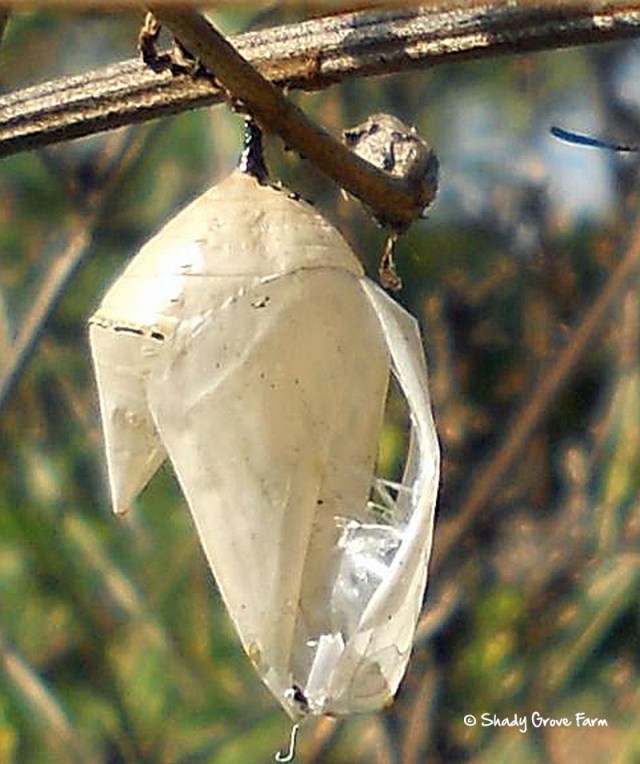
Why mourn for a cocoon
After the butterfly has flown?

Death is one of the few givens in life, and yet we fear it. We immaturely deny its presence or refuse to take it into account. In life, where so few things are stable enough to serve as true reference points, death is one of our few assurances.

Death is not an ending. It is a transformation. What dies is only our sense of identity, which was false to begin with. Death is the threshold of this life. Beyond it is something else, some mystery. We can only be sure that it is unlike this life.

Let us be unabashed in admitting that no one knows death definitely. The closest we may come is a supposed near-death experience, which, by definition, cannot be death itself. Alternately, we can examine other people who have died. We can look at a corpse. When we do, we see that whoever or whatever it was that animated that body is longer in force. Is that body our dead friend? No. Whatever it was that was the person we knew is gone. What use is there to mourn over a lifeless shell in a casket?

Death defines the limits of life. Within those limits, there is structure upon which to base one’s decisions. Whenever one deems that one’s life has been fulfilled, one can utilize death as the portal away from this existence.