
Daily Tao / 219 – Composure

meditating-silhouette

Although they may have to kill
Or suffer themselves to be killed,
A person of composure remains dispassionate.
Nothing is ever destroyed,
Nothing is ever created.
All is infinity.

For most people, killing is an abhorrence. If they had to kill, they would be horrified and their emotions would be uncontrollable. Likewise, if they were being threatened with death, they would be afraid and would struggle to keep alive.

Both those situations involve extreme attachment to what we know and how we wish to remain. Both situations indicate a fundamentally limited view of the world. We assume that we are truly destroying someone. But though this body may be slain, the soul cannot be slain. Every soul is but a part of an infinite, cosmic soul.

You could subtract numerous souls from the world, and the number of souls would not be diminished. Numerous souls could be born, and the number of souls would not be augmented. Nothing is truly destroyed, and nothing is truly born. Only appearances change.

Therefore, people of composure view the transformations of the world calmly. They do not become alarmed with the different permutations of phenomena. They know that these are all merely outer manifestations of an indefinable, unlimited, and infinite reality.


Daily Tao / 218 – Ownership

LAuberge-de-Sedona-Boy-Ducks_588

A small boy drives
A hundred ducks to the lake
With a tasseled stick :
A mass of excited white.

A small boy can command an entire flock of ducks with a slender stick. The ducks go contentedly down to the lake to play in the mud. In the end, of course, they end up as someone’s dinner.

They obey the stick because they respond to their conditioning. In truth, they don’t need to obey it. They don’t need to be someone’s meal. As for the boy, he is doing his job, but he does not own the ducks in an ultimate sense. He exercises his power over them, and they respond, yet neither realizes that their bond is provisional.

Ownership of property is only an artificial construct as well. If we can remember that ownership is something that exists only by definition, then we can give up possessiveness, defensiveness, and greed. What does it matter how much money or land you say you have? You cannot actually own it.

You don’t even own your body. Ultimate ownership would mean total control. You would never age. You could make it as beautiful as you wanted. You would never suffer from accidents. But the fact is that we are all imprisoned in flesh that ages, decays, becomes diseased, and can be destroyed by some rather minor accidents. You don’t own your body. You live in a borrowed shell. Why not seek the truth that goes beyond the body?

Daily Tao / 217 – Runaway

Homeless_Youth

They call her useless
And yet push for achievement.
“I want a baby.”
They bicker between themselves,
And reproach her for being distant.
“My friends have so much fun.”
They dwell on money,
And indenture her to loyalty.
“I can’t stand this every day.”
She is innocent.
They have ambitions.

There was a girl who was both a good student and a good athlete. Her family did not find that to be enough. They pushed her to spend all her time studying or practicing for her next sport competition. Finally, she could stand it no further. She ran away.

Her family was firmly convinced that it was a kidnapping.

In so many families, a girl is told how useless she is. Is it any wonder that she gets pregnant? A boy is told how lazy he is. Is it any wonder that he rebels as an act of individuality?

When parents demand without understanding, they thwart development. Forcing children to fulfill parental ambitions destroys individuality. Before parents blame their children, they should first look to how their daughters and sons were raised.

Daily Tao / 216 – Poetry

smoke_incense_black_1226804_o

Anything is subject for a poem :
A catalog of boxing equipment, a collage of other poems,
Serpentine trail of incense, raised deer fur, old shoes pointed pigeon-toed,
Glass and steel cityscape, almond eyes of a saint, weeping tiny flowers,
Sunlight on whitewashed walls, blue shadows of stooped women,
A spring mousetrap, a trickle of blood in the gutter,
The homing swoop of a gull, chill whitecapped bay, scent of eucalyptus.
Green lawn of broken blades, clods of fat earth.
Anything is subject for a poem.

Even in sleep, write a poem.
When waking, write a poem.
While loving, write a poem.
Even voting, write a poem.
When angry, write a poem.
While dreaming, write a poem.

The sages say quite seriously that those who wish to know better should cultivate the poet in themselves.

Daily Tao / 215 – Decline

brain-fog

Fog chills heaven to gray,
Nights come earlier.
Everyone knows decline,
But few discern its border.

Although it is summer and there are many warm months to come, it is possible to sense that the heavens are already turning downward. Nearly imperceptibly, the fruit is ripening on the trees and the nights are lengthening once again. It is too early to talk of autumn, and yet the next season is on its way.

Why do we never prepare for decline? We all realize that it is a valid phenomenon — we know about the fall of empires, the aging of heroes, the lessening of our own skill — but we are not always aware of its approach. We often realize too late that we are in a period of decline, and so we are unprepared. It takes a wise person to perceive the moment when things begin to change.

Summer does not fade away in a day. Our actions must accord with the times. Just as the decline of summer is gradual, so too should our actions be commensurate with the pace of change. Even though decline may be approaching, we must gauge how quickly or how slowly events are moving. If we are too hasty — like someone who notices the first cool breeze and immediately dons winter clothing — we will be overreacting. It is important to think of decline as something natural and inevitable. Therefore there should be no emotional values attached to it. It simply happens, and that is all.

Daily Tao / 214 – Abundance

abundance

Sun in heaven.
Abundance in great measure.
Supreme success
In the midst of impermanence.

The midday sun in summer is the hottest and brightest of all. It symbolizes a zenith, a fulfillment, a period of great brightness. In the affairs of people, it stands for the combining of strength and clarity, which yields brilliance. When the times are in accord, abundance cannot be opposed.

The period of abundance is a time for vigorous action. Bright light shines not only on the good but on the bad as well. Therefore, when evil is revealed, all good people must oppose it. Pluck it out by the roots and energetically promote the good.

Abundance is a cause for celebration, but followers of Tao also remember to be cautious. No zenith can be preserved forever. In fact, the time of abundance just precedes an inevitable path of decline. Nothing in life is permanent. Therefore, the wise person enjoys and is gladdened by abundance. But while they take advantage of the time, they also prepare for what will follow.

Daily Tao / 213 – Immigrant

Ellis_island_1902

Magic doesn’t work in this new place.
Native poetry has lost rhythm and rhyme,
Familiar food is labeled a curiosity,
And hostile stares replace familial love.
To be an immigrant
Is to be solitary in the midst of millions.

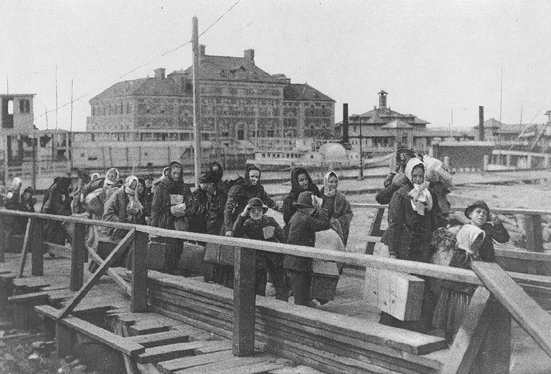
Immigrants travel from their native lands for many reasons, but in general, they all involve expectations for a better life. For this, they will risk uncertainty, exploitation, discrimination, hostility, poverty, and sometimes even separation from family. Those who survive develop an inner fortitude and determination that sees them through their suffering.

The preservation of spirituality is as much a concern as anything else. Spirituality, except in its highest stages, has a definite cultural context. (There is spirituality that takes its power from the land, culture, and time — that is why most types of magic will not work outside their native lands; there is spirituality that one carries within oneself, and there is a rare spirituality which transcends all time and place.) Immigrants try either to maintain their native beliefs or to adopt the beliefs of their host country. The first option is difficult : They are in a culture incompatible with their native beliefs and will sustain their spirituality only if it was already strongly established. In the second case, where immigrants adopt the host country’s spirituality, they must learn an entirely new system. In either case, immigrants must cope with the problems of conflict between two cultures, until they reach a spiritual stage where cultural references become meaningless.

Daily tao / 212 – Form

374987_10151419847724117_899086545_n

At first, form is needed.
Then doubt and inhibition must be dispelled.
Eventually, form is celebrated with joy,
And expression becomes formless.

In all fields of endeavor, including spirituality, one must start out with certain structures, procedures, and forms. Even though one admires the seemingly effortless virtuosity of the masters, it will take some time before one can reach that level.

Take dance, for example. The novice student must drill constantly on the basics, isolating each step and movement with meticulous attention. Although the emphasis on structure may add to the beginner’s inhibition, it must be done. Eventually, the dancer will learn to let go. The steps will have become a natural part of movement. Then dance can be celebrated joyously. Our now mature dancer may even dance in a way that seems so spontaneous, so magical, that it will seem formless — or more precisely, the form will emerge with fluidity, grace, originality, and beauty.

The same is true of spirituality. At first, all the restrictions and practices seem quite constricting. Eventually, you reach a stage where meditation flows quite spontaneously. Every day is new, fresh, and full of wonderful insights. The beauty of the world then shows itself as it is, doubts fade away, and the banality of ordinary life is replaced by the awe and grandeur of the soul. This is true formlessness.

Daily Tao / 211 – Absolute

One_With_Nature__13196_zoom

They say, “You are god.”
But everyone is.
They say, “All is god.”
Then why are there differences?
They say, “All is an illusion.”
But does that include god?

Those who follow Tao declare that there is no evidence that a god created our world. They have not found any empirical proof, and they cannot accept the idea philosophically. They reason that god must be absolute and this means oneness, omnipotence, omniscience, and omnipresence. Naturally, anything separate and distinct would not satisfy this criteria. If there was a god and a world that god created, then there would be two things — and god could not then be considered absolute. If there were an absolute god, there could not be anything separate from god.

Everything is god. We are also god. However, we fail to realize this. Why? Because we look for god outside of ourselves. We make the mistake of taking ourselves as the viewer and then seek god as the object of our examinations. Unfortunately, everything we perceive is tainted by our subjectivity, and anything that we define as god “out there” cannot be god because it is not absolute. All you’ve found is something that exists in relation to your perceptions.

You are god. The only way to confirm this is to remove the barrier of subjectivity that prevents you from realizing your essential oneness with all things.

Daily Tao / 210 – Variation

Man Sitting In Valley

Never jump out of the same hole twice.

We all yearn for success. Not just the success of money, prestige, or power — the simple success of having things work. If you have a hobby like gardening, you love to see your flowers respond to your care. If you are in school, you want to master your courses. If you are a scientists, you look for results from your experiments. All of us want to be successful.

But once you hit on something that does work, it takes great courage to keep going beyond your limits. This is especially obvious in creative fields such as art, music, and writing. It is hard to reach an appreciative audience; once you find something that works, it is hard to let go of it. You keep doing the same thing, like musicians who make a career of performing the same tune. But no matter what your field of endeavor, you mustn’t do that. Don’t jump out of the same hole twice. You may not be as materially successful, but you will be more successful on a larger level.

Spirituality is creativity. Only with creativity can you have the power to follow Tao. Only with creativity can you remold your personality into a spiritual vehicle. Only with a great breadth of variation can you follow the constantly changing Tao. Therefore, when following Tao, don’t cling to methods and dogma. Be spontaneous.