Daily Tao / 13 – Absorption

Loading...

Screen Shot 2014-01-12 at 2.10.58 PM

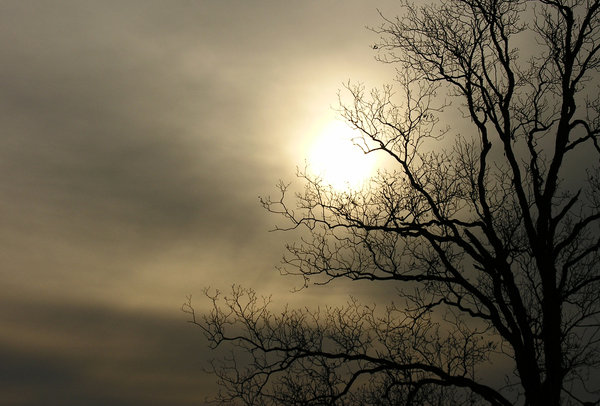
Crimson light through pine shadows.
Setting sun settling into the ocean.
Night follows the setting sun,
Day follows the fleeing moon.

All too often, we tend to think of absorption as a static thing : Water is absorbed into a sponge, and there it stays. But true absorption is a total involvement in the evolution of life without hesitation or contradiction. In nature there is no alienation. Everything belongs.

Only human beings hold ourselves aloof from this process. We have our civilization, our personal plans, our own petty emotions. We divorce ourselves from process, even as we yearn for love, companionship, understanding, and communion. We constantly defeat ourselves by questioning, asserting ourselves at the wrong times, or letting hatred and pride cloud our perceptions. Our alienation is self-generated.

In the meantime, all of nature continues its constant flow. We need to let ourselves go, enter freely into the process of nature, and become absorbed in it. If we integrate ourselves with that process, we will find success. Then the sequence of things will be as evident as the coming of the sun and the moon, and everything will be as it should be

Daily Tao / 12 – Shaping

近义词

pottery-2

Potter at the wheel.
From centering to finished pot,
Form increases as options decrease;
Softness goes to hardness.

When a potter begins to throw a pot, she picks up a lump of clay, shapes it into a rough sphere, and throws it onto the spinning potter’s wheel. It may land off-center, and she must carefully begin to shape it until it is a smooth cylinder. Then she works the clay, stretching and compressing it as it turns. First it is a tower, then it is like a squat mushroom. Only after bringing it up and down several times does she slowly squeeze the revolving clay until its walls rise from the wheel. She cannot go on too long, for the clay will begin to “tire” and then sag. She gives it the form she imagines, then sets it aside. The next day, the clay will be leather hard, and she can turn it over to shape the foot. Some decoration may be scratched into the surface. Eventually, the bowl will be fired, and then the only options are the colors applied to it; its shape cannot be changed.

This is how we shape all the situations in our lives. We must give them rough shape and then throw them down into the center of our lives. We must stretch and compress, testing the nature of things. As we shape the situation, we must be aware of what form we want things to take. The closer something comes to completion, the harder and more definite it becomes. Our options become fewer, until the full impact of our creation is all that there is. Beauty or ugliness, utility or failure comes from the process of shaping.

Daily Tao / 11 – Healing

Loading...

mckenzie_lava_fields__willamette_national_forest

Fire cools.
Water seeks its own level.

No matter how extreme a situation is, it will change. It cannot continue forever. Thus, a great forest fire is always destined to burn itself out; a turbulent sea will become calmer. Natural events balance themselves out by seeking their opposites, and this process of balance is at the heart of all healing.

This process takes time. If an event is not great, the balancing required is slight. If it is momentous, then it may take days, years, even lifetimes for things to return to an even keel. Actually, without these slight imbalances, there could be no movement in life. It is being off balance that keeps life changing. Total centering, total balance would only be stasis. All life is continual destruction and healing, over and over again.

That is why, even in the midst of an extreme situation, the wise are patient. Whether the situation is illness, calamity, or their own anger, they know that healing will follow upheaval.

Daily Tao / 10 – Disaster

灾难

71289_house_fire1m

Mute black night,
Sudden fire.
Destruction.

Disaster strikes at its own time. It is so overwhelming that we can do nothing other than accept it. It alters the course of our days, our work, our very thinking. Although it is tempting to resent disaster, there is not much use in doing so. We cannot say that a disaster had malice toward us, though it might have been deadly, and it’s hard to say that it has “wrecked” our plans : In one stroke it changes the very basis of the day.

Disaster is natural. It is not the curse of the gods, it is not punishment. Disaster results from the interplay of forces : the earthquake from pressures in the earth, the hurricane from wind and rain, even the accidental fire from a spark. We rush to ask “Why?” in the wake of a great disaster, but we should not let superstition interfere with dispassionate acceptance. There is no god visiting down destruction.

Disasters may well change us deeply, but they will pass. We must keep to our deeper convictions and remember our goals. Whether we remain ash or become the phoenix is up to us.

Daily Tao / 9 – Optimism

乐观

mfXjeYE

Clearing blue sky,
A promise in bare branches.
In winter, there are sunny days.
In adulthood, childhood can return.

In winter, all things appear dead or dormant. The rain and snow seem incessant, the nights long. Then one day, the sky clears to a brilliant blue. The air warms. A mist rises from the earth and the perfume of water, clay, and moss drifts through the air. Gardeners are seen preparing new stock, though they are only bare branches and a gray root ball. The people are optimistic : They know that there will be an end to the cold.

In adulthood, we often see responsibilities as something dreadful. Why should we dig the ground when the weather is disagreeable? We see activities only as obligations, and we strain against our fate. But there is a joy to working in harmony with the proper time. When we do things at just the right occasion and those efforts bear fruit later, the gratification is tremendous.

There was an old man who began an orchard upon his retirement. Everyone laughed at him. Why plant trees? They told him that he would never live to see a mature crop. Undaunted, he planted anyway, and he has seen them blossom and has eaten their fruit. We all need that type of optimism. That is the innocence and hope of childhood.

Daily Tao / 8 – Work

工作

man_with_axe_chopping_woo_450

The woodcutter
Works in all seasons.
Splitting wood is both
Action and inaction.

Even when it is snowy, the woodcutter must split wood. Unless he does, he and his family will not stay warm, and those who depend upon him will not survive. But the woodcutter does not work simply on a piecemeal basis. He labors in concert with the seasons : He worked hard to store wood prior to the first cold so that he would have the luxury of merely splitting kindling now. His work seems slight in one season, because he was industrious in the previous one.

When he splits wood, he must place the log on the block and raise his axe. But he must strike the wood with the grain, and he must let the axe fall with its own weight. If he tries to chop across the grain, his effort would be wasted. If he tries to add strength to the swing of the axe, there would be no gain.

Like the woodcutter, we can all benefit from working according to seasonal circumstances. Whether it is the time or the method, true labor is half initiative and half knowing how to let things proceed on their own.

Daily Tao / 7 – Forbearance

bare_tree

Arctic breath coils the mountain,
Rattling the forests’ bones.
Raindrops cling to branches :
Jewelled adornment flung to earth.

Trees in winter lose their leaves. Some trees may even fall during storms, but most stand patiently and bear their fortune. They endure rain, snow, wind, and cold. They bear the adornment of glycerin raindrops, glimmering icicles, or crowns of snow without care. They are not concerned when such lustrous splendor is dashed to the ground. They stand, and they wait, the power of their growth apparently dormant. But inside, a burgeoning is building imperceptibly.

Theirs is the forbearance of being true to their inner natures. It is with this power that they withstand both the vicissitudes and adornment of life, for neither bad fortune nor good fortune will alter what they are. We should be the same way. We may have great fortune or bad, but we should patiently bear both. No matter what, we must always be true to our inner selves.

Daily Tao / 6 – Emerging

4201-2884

Thunder and rain at night.
Growth comes with a shock.
Expression and duration
Appear in the first moment.

Things cannot remain in stillness forever. Winter storms may destroy some things, but they also prepare the way for life. If things are swept away, it is appropriate. There must be an opportunity for new living things to emerge and begin their own cycle.

All growth comes with a shock. When a sprout breaks its casing and forces its way to the surface of the earth, it is the climax to a long and deep accumulation of life force. We may think that it came up suddenly, but in actuality, it emerged as the product of unseen and subtle cycles.

When the seedling appears, it carries with it the complete pattern for its growth, perhaps even the makings of an enormous tree. Although time and the right conditions are necessary, neither of those factors adds anything to the inherent nature of the seedling. It completely embodies its destiny. Therefore, the growth and character of the plant — and its very life — are all present at the moment of emerging.

Daily Tao / 5 – Sound

 声

csc_3022

Wind in the cave :
Movement in stillness.
Power in silence.

In a cave, all outer sounds are smothered by rock and earth, but this makes the sounds of one’s own heartbeat and breath audible. In the same way, contemplative stillness turns us away from everyday clamor but allows us to hear the subtle in our own lives.

When listening not with the ear but with the spirit, one can perceive the subtle sound. By entering into that sound, we enter into supreme purity. That is why so many religious traditions pray, sing, or chant as a prelude to silence. They understand that the repetition and absorption of sound leads to sacredness itself.

The deepest sound is silence. This may seem paradoxical only if we regard silence as an absence of life and vibration. But for a meditator, silence is sound unified with all of its opposites. It is both sound and soundlessness, and it is in this confluence that the power of meditation emerges.

Daily Tao / 4 – Reflection

Loading...

blue_moon-on-water

Moon above water.
Sit in solitude.

If waters are placid, the moon will be mirrored perfectly. If we still ourselves, we can mirror the divine perfectly. But if we engage solely in the frenetic activities of our daily involvements, if we seek to impose our own schemes on the natural order, and if we allow ourselves to become absorbed in self-centered views, the surface of our waters becomes turbulent. Then we cannot be receptive to Tao.

There is no effort that we can make to still ourselves. True stillness comes naturally from moments of solitude where we allow our minds to settle. Just as water seeks its own level, the mind will gravitate toward the holy. Muddy water will become clear if allowed to stand undisturbed, and so too will the mind become clear if it is allowed to be still.

Neither the water nor the moon make any effort to achieve a reflection. In the same way, meditation will be natural and immediate.