
10 Things to Give Up in Exchange for Happiness –

Happiness

From Tamara Star :

I’m told happiness is a choice.

Unfortunately we complicate our lives to the point of being unable to recognize happiness when it appears before our eyes.

So how to clear the slate? Here are 10 things you’ll need to give up in exchange for your happiness.

1. Give up caring what other people think of you. I know it seems counter intuitive as we humans are primal pack animals that don’t want to be cast from the village, but spending time worrying what others think, is a waste of energy. You’ll never please everyone and it’s none of your business what others think of you.

2. Give up trying to please everyone. Unless you’re living life to the beat of your own drum, your tribe won’t be able to find you. Be the best version of you you can be, and you’ll naturally attract in the people that are supposed to surround you.

3. Give up participating in gossip. 100 percent of the time, those sharing gossip with you will gossip about you. Believing gossip is like gambling everything on a horse sight unseen. It’s naive.

4. Quit worrying. Where thoughts go, energy flows. Worry is investing time and energy in something you don’t want to have happen. Learn to let go and trust.

5. Let go of insecurity. When we take ourselves too seriously, we think everyone else does too. There is one version of you on the planet. Be it, own it and quit worrying about it. No one really cares or watches you that closely.

6. Stop taking everything personally. Truth is, most people are too consumed with their own life to really consider what you’re doing. As my first boss said so well: “The world doesn’t revolve around you. Most people’s reactions have nothing to do with you, so let it go.”

7. Give up the past. We’ve all been hurt, we all had parents that made mistakes and we’ve all been through hell. You didn’t listen to your parents when you were younger, so why are you still listening to their voices in your head now? Every experience in life has taught you something or made you stronger.

8. Give up spending money on what you don’t need in effort to buy happiness.Living simply allows the space for life to flow. We complicate our lives by spending too much money and filling our home with “things.” Less is truly more.

9. Give up anger. Anger burns a hole in the hand of the person still holding on to it. Move it out once and for all.

10. Give up control. Control is an illusion. We live in an out of control world. Learn to embrace the new and welcome change; otherwise you’ll grow old through your own rigidity. Learn to let go.

Tamara Star is a coach, healer, speaker, writer, and businesswoman. Connect with Tamara on her websiteFacebook or Twitter.

 http://www.huffingtonpost.com/tamara-star/exchange-these-for-happiness_b_4073396.html

Daily Tao / 286 – Teaching

VandyTeachingStatement_allwords

Give back what you’ve learned.
Share your experience.

If you are in the position of teaching others, then you should teach without reservations. What need is there to hold back? You could tell the secret of life ten times over, and it would still be safe. After all, the secret is only known when people make it real in their own lives, not when they simply hear it.

In the past, masters were selfish. They had only learned with extreme difficulty, and so they in turn made it difficult on others. In addition, they were afraid of being surpassed by their students, and so they always held back some key. How foolish this attitude was! How can a student ever challenge a master, unless the master allows his or her abilities to decline? You should teach dispassionately and without holding back.

When you cultivate internal power, it begins to accumulate within you. But there is one odd thing. You cannot hold it in forever. If you try to do that, the spiritual energy will destroy you. But if you use it prudently — to heal others, to teach others, to comfort others — then the energy will surge back stronger and stronger, like a well that always replenishes itself. The more you give, the more you gain in return. The more selfless you are, the more the self benefits.

Daily Tao / 285 – Radiance

7

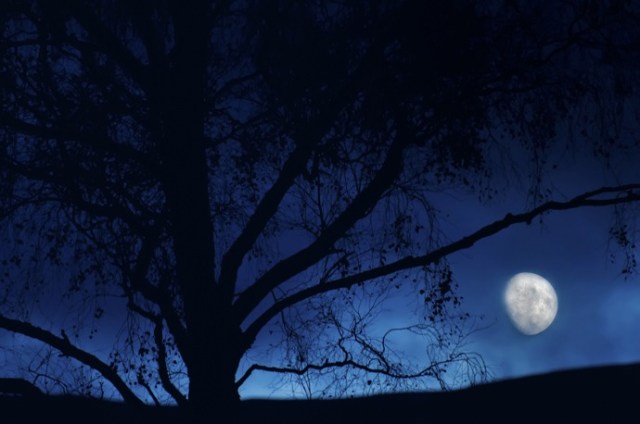
The moon shines at midday.
The master blesses the people.

Humility is good, but sometimes it is inappropriate. Self-cultivation in private is good, but sometimes it is also inappropriate. Why? Because if one never comes out to help others and show that it is possible to be spiritual in modern times, then people will lose faith. When people go to hear a spiritual master, they do not go to hear self-deprecation. They go to see perfection.

In the past the masters would come down from the mountains to let people see them. By going among the people, they reaffirmed the validity of spirituality. By walking among the masses, they inspired others to undertake self-cultivation. By helping those whom they encountered, they directly touched the lives of others. Self-cultivation and concentration on the divine is fine, but there are times when one should remember one’s fellow beings.

When one shines forth, it is like the moon at midday — an event so bright that what is normally hidden outshines even the brightest light. That is what it is like when the masters walk among the people. By their presence, they illuminate and gladden all who come their way.

Daily Tao / 284 – Environment

New-York-City-traffic-and-smog-by-joiseyshowaa-via-Flickr

How can you live
With the constant noise of traffic?
The stench of garbage?
The sight of buildings instead of mountains?
The movement of streets instead of rivers?
The feel of pavement instead of earth?

There are some metropolitan areas famous for their power, their sophistication, their history, their place in civilization. These places cannot be centers of spirituality too. You only need to look at them with open eyes and heart. How can anything holy root there?

The noise of traffic is constant. At any time of the day or night, that distracting roar, that underlying trembling disrupts the subtle. The air is not clean but is filled with dust and soot. Especially when the weather is hot, the smell of rotting garbage wafts up from the foundations like the odor of leprosy. The earth is unable to breathe, smothered beneath concrete, asphalt, steel, and junk.

Some people who live in these places become interested in spirituality. They want to know if it is possible to reach high levels in deeply urban environments. The answer is no. It is not possible to become fully realized in an urban environment. For to gain realization means the achievement of special psychophysical states. That requires quiet cultivation and an acquaintance with the subtle. When the roar of the city is all there is, how can the song of the divine be heard?


Daily Tao / 283 – Duration

moonlight on a wet and wild night

The sun shines half a day,
The moon dominates the rest.
Even contemplation
Should have its proper duration.

Some monks meditate sixteen hours at a time. Some have sat cross-legged so long that they have calluses on the sides of their feet. Others need frames to prop their bodies up, or they rest sticks on the floor with the sharp tips at their chins, so that they are awakened by a stab if they doze off. Is this admirable? Or is it mere obsession?

Meditation should have its proper duration. Once one finds the proper procedures, they should not be seen as an activity isolated from the rest of life. Those who follow Tao hold meditation to be imperative, but not exclusive. The primary point of this existence is to live, and all living things move and grow. Therefore meditation should be integrated with the flow of life. It should not dominate above all else.

There is one exception to this. That is the case where one spontaneously and naturally falls into a long period of meditation. Sometimes this state will last for hours, even days. This is not the same as meditation artificially induced by forced sitting. This is a wholly different type of meditation. One is now with the universe and meditation ceases to be an activity. It becomes a natural expression.

Daily Tao / 282 – Focus

Chess Pieces on Chess Board

Two chess masters confront each other
Without music, chorus, or sound.
Chairs do not squeak,
Audience does not talk.
Why, then, do people meditate carelessly?

When two chess masters play, the audience is solemn. Everyone understands what is at stake. Everyone knows that the masters must be allowed utter silence and total concentration. But when it comes to people’s attitudes about meditation, they assume that noisy streets, inconsiderate roommates, foul smells, and dirty rooms have no impact. After all, isn’t meditation just a mental activity divorced from the realities of environment?

If that was so, there wouldn’t be meditation halls. If that was so, there wouldn’t be places of solace. If that was so, then people wouldn’t seek the quiet of secret gardens. Meditation is not a supplementary activity. It is not mere relaxation and stress reduction. It is the way to bring one’s very humanity into focus.

If we want to succeed in meditation, we must act in the correct setting. We need places where the air is fresh, nature is close by, and we can remain undisturbed. Then we can slip into serenity. If we can understand the need of the chess masters for uninterrupted focus, we can also understand the precise attention that we must bring to our meditation.


Daily Tao / 281 – Uncarved

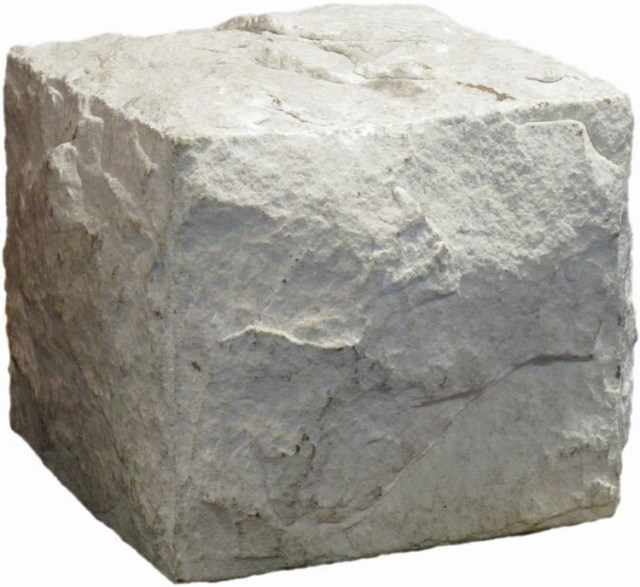
block4

Once a statue is finished,
It is too late to change the arms.
Only with a virgin block
Are there possibilities.

It’s not easy to raise a child. You have to set an example all the time. Sometimes it is important for both child and guardian to understand that a child should not do certain things that the adult does. This is not hypocrisy. It is wisdom.

There was once a child who responded to his father’s admonitions by saying, “You do the same things.” The father took his son to a carver of temple figures. In the yard were great blocks of camphor and rosewood. Inside the studios were deities in various stages of completion, from gods still with fresh chisel marks to brightly painted and gilded masterpieces.

“I am older than you,” said the father. “So I am more like one of these finished statues. I have my accomplishments, and I have my faults. Once this figure has been carved, we cannot change the position of its arms.

“But you, my son, are like the pieces of wood in the yard, still to take shape. I do not want you to have the same faults as I do, so I do not let you do certain things. Look at me. Yes, you say I still do certain things, but doesn’t that show how hard it is to undo a mistake once it is carved into you? Don’t copy me, and don’t make the same mistakes that I did. Only then will you become more beautiful than I.”

Daily Tao / 280 – Measure

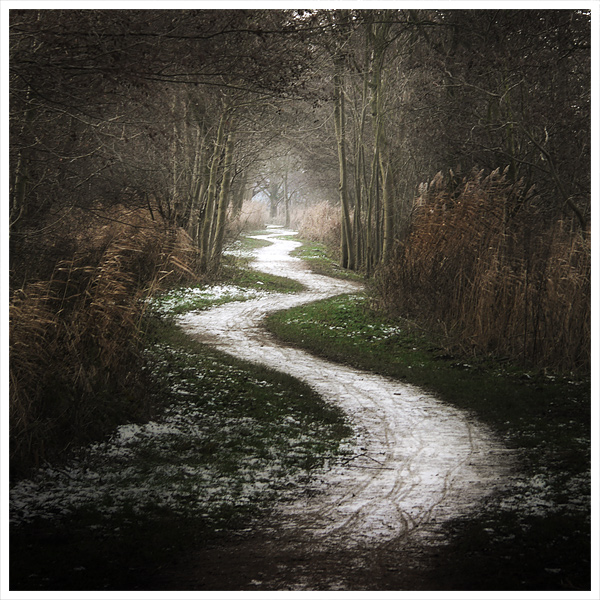
Path

Birthdays, anniversaries, memorials, festivals
Measure our progress on the path.

How old are you? Have you made a life you can look back on and be satisfied?

How long have you been practicing your devotions? Can you look back on years of unbroken progress?

How long has it been since a significant world event? Has the world gone any further in creating collective good?

Is today a day of celebration? How much have you done since the last holiday?

Each day of measure is a milestone on the path. If you are just beginning on the path, then it is good to determinedly look forward to the day when you can look back on a year, a decade, or many decades of perseverance. If you are today standing on the vantage point of some anniversary, then count the time that you have maintained your progress and be glad.

Those who follow Tao do not celebrate their birthdays, do not mark the anniversary of their embarking on the path. They say that following Tao is one continuous flow, not to be violated by the calendar. They are like hikers who wander, not worrying about the road, not concerned about distance or time. The rest of us have not yet attained that level of pure spontaneity. For we who are still struggling to maintain a foothold on the path, it is profitable to look forward to passing milestones as a way of encouraging ourselves and measuring our progress.

Daily Tao / 278 – History

Trees-Autumn-Season-Leaves-Mist-485x728

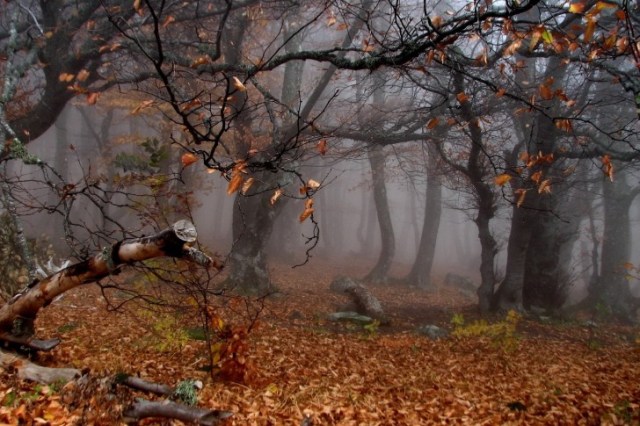
Autumn trees swept with dawn
Look as if they’ve been lacquered,
Rooted around an old battlefield.
The mists linger here like ghosts.

There are still places where you can walk and feel a profound gloom. Such is the case with old battlefields. People died there. The force of their determination still resonates.

You can find such places in every country. Often no one builds anything there, even when land is dear. We say that we do not want to forget our dead. We say that there should be a memorial. Others say that the disturbance there is so great that the living cannot abide with the dead.

History is essential to our understanding of the present. Unless we are conscious of the way in which we came to this point in time as a people, then we shall never fully be able to plan the present and the future. We need to know what roots are still alive. We need to know how things came to be so that we can project from here. We also need to know the failures of the past so that we can avoid repeating them.

History is not always glorious. Sometimes our history is melancholy. We must accept that. This life is terrible and people do terrible things to each other. If we are to live for the sake of the good and strong, then we should have as much of a background as possible.

Daily Tao / 277 – Whole

pageslide-nourish_at_home

I hate the way this chicken comes
All bagged in plastic
Without head or feet;
Neck, heart, liver, and gizzard
Stuck into its cavity.
No wonder people feel unconnected.

Traditional people like to see the whole animal when they shop for their meals. In cultures where personal contacts are more meaningful and closeness to the earth is a way of life, it is no surprise that people are interested in a complete relationship to their food. They buy it or raise it, they harvest it, they clean it, and they cook it — all before they eat it in gratitude. They don’t become sentimental over their food — practicality is to understand that we kill to survive — but they do give thanks for what has died to sustain them.

Today we have a very incomplete relationship to our food. We don’t see where something grows, we eat foods out of season, we buy prepared foods made by someone we don’t even know. There is a great power in knowing your food, knowing where it came from, preparing it with your own hands. This food, whether vegetable or animal, died for us. The least we can do is partake of it thoroughly and with respect.

Nowadays it is quite common for people to feel isolated. They lament not having friends, not having genuine experiences, not having a sense of who they are. If even the food that we eat and the way that we eat is lacking in wholeness, then how will we feel completion in the rest of our lives?