Daily Tao / 141 – Wrinkles

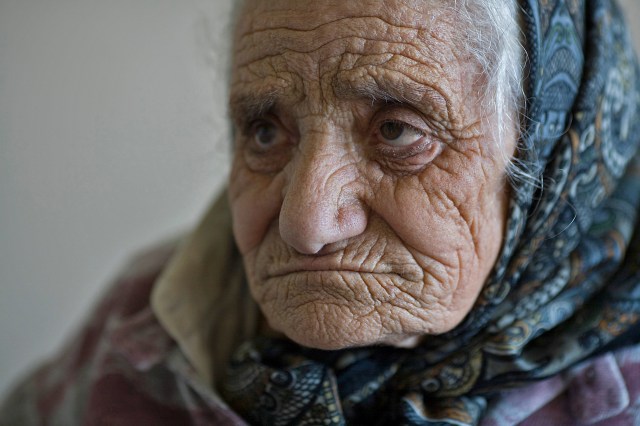
wrinkled-face11

Lines on the face, tattoos of aging.
Life is proved upon the body
Like needle-jabs from a blind machine.

The older one gets, the more one is conscious of aging. We can barely remember childhood innocence and exuberance. We are surprised by the youthful vitality and unmarked face when we see earlier photos of ourselves. When we look in the mirror, we reluctantly acknowledge the aging mask. It seems that there is no escaping the marks of life.

Every experience that we have, everything that we do and think is registered upon us as surely as the steady embroidery of a tattoo artist. But to a large degree, the pattern and picture that will emerge is up to us. If we go to a tattoo artist, it is we who select the picture. In life, it is we who select what we will become by the actions we perform. There is no reason to go through life thoughtlessly, to let accident shape us. That is like allowing oneself to be tattooed by a blind man. How can you help but turn out old and ugly?

Whether we emerge beautiful or ugly is our sole responsibility.

Daily Tao / 140 – Dissent

doku-poster-2

Old man : Dissent is not disloyalty.
Be careful before you retaliate.
Your steel wrapped in cotton
May only be brittle bone wrapped in fat.

No one is a supreme authority. People seek leaders, priests, gurus, and hermits thinking that someone has a precise formula for living correctly. No one does. No one can know you as well as you can know yourself. All that you can gain from a wise person is the assurance of some initial guidance. You may even spend decades studying under such an extraordinary person, but you should never surrender your dignity, independence, and personality.

There is no single way to do things in life. There are valid paths, even though they may differ from the ways of respected elders. Diversity is good for tradition. Too often, elders confuse dissent with disloyalty and punish people for the crime of having a different view. They are no longer in touch with Tao but instead mouth self-serving convention. Perhaps the panic of their own impending death makes them clutch. When the leaders become repressive, it is a sign that their time is drawing to a close.

A saying about old masters was that they were like steel wrapped in cotton : They appeared soft on the outside but still held great power on the inside. We all hope for elders like that. But oftentimes, the old masters have lost their mandate of Tao. Then, when tested, they are merely brittle bone and fat. How can we respect such people?

Daily Tao / 139 – Marriage

1492u

Wall of flames, bridge of tears.
Snowflake on newly forged links.

For a marriage to last, a couple must go through great travails and hardships. It is like a process of forging steel links together. The iron must be heated to a high degree and then plunged into cold water. A marriage alternates between the heat of passion and love and the chilling times of tragedy, conflict, and adversity. An enduring marriage becomes like tempered steel.

It is difficult to go through life alone. We all need support and the sense of belonging that comes from working toward goals shared with another. For such a relationship to work, there must be a basic compatibility of values, outlook, and purpose. It is an inadequate cliché that husband and wife must be friends as well as lovers. Two mates can know a loyalty found in no other type of relationship. Yet even in the face of such strength, Tao reminds us of the need for moderation.

Ultimately, all relationships are temporary. False attachment to another can become an addiction, a voluntary bondage detrimental to clear perception. We should not bind another to ourselves, should not define ourselves by our marriage, should not force another to stay with us. But if chance allows us to walk together, who is anyone to challenge our choice of walking companions?

When it is time to part, then it is time to part. There should be no regrets. The beauty of marriage is like the fleeting perfection of a snowflake.


Daily Tao / 137 – Vulnerabilities

zen-warrior

A warrior takes every person as an adversary.
He sees all their vulnerable points,
And trains to eliminate his own.
A sage has no vulnerable points.

A warrior takes everyone as a potential adversary. He assesses each person that he meets for their strengths and weaknesses, and he places himself strategically. No confrontation is ever a surprise. Protection, competition, honor, and righteousness are his principles.

He is the weapon. Therefore, a warrior trains body and mind to perfection. He knows that the average person has hundreds of points where death can enter. For himself, he seeks to eliminate as many of his own vulnerabilities as possible. In combat, he defends one or two points, and the rest of his attention is devoted to strategy and offense. Yet no warrior can eliminate all vulnerable points. Even for a champion, there is always at least one. Only the way of the sage eliminates all weaknesses.

It is said that the sage has no points for death to enter. This makes the sage, who is perfect in Tao, superior to the warrior, who is merely skilled in Tao. The warrior accepts death, but does not go beyond it. The sage goes beyond concepts of protection, competition, honor, and righteousness, and has no fear of death. The sage knows that nothing dies, that life is mere illusion : Life is but one dream flowing into another.

Daily Tao / 136 – Judgement

Decorative Scales of Justice in the Courtroom

The accused stands helpless before the judge.
Pen is poised to determine right from wrong.
In one arbitrary stroke,
Life is suddenly decided.

Do judges have Tao? Dispassionate to the point of cruelty, making distinctions on the basis of arbitrary rules, can they be a part of a humanistic view of Tao? The answer depends on the context. If you are speaking of the Tao of nature-loving hermits, the answer is no : No one has the right to pass judgment on another. If you are speaking of society, however, those who follow Tao accept the necessity of set rules.

These laws are the Tao of the society. Once you are in the world of people and away from the world of nature, you are immersed in dualistic distinctions. Then concepts such as righteousness and mercy have meaning. Judgment is the process of comparing ideas in order to find agreement or disagreement with the Tao of society. The facts must be thoroughly examined. Judges must clearly and wisely apply distinctions. That which agrees is the truth.

In the same way, we are all compelled to examine the ongoing circumstances of our lives. That is part of the responsibility of being human. Embracing Tao will not exempt you from the need to render judgments and make decisions. We are both the ultimate judge and the accused. When your final day comes, you yourself must be the examiner. Did you do well? Or did you squander your precious existence? You must decide.

Daily Tao / 135 – Visions

408291_405184396210297_461062890_n

Neither drug-induced
Nor self-induced visions :
Pierce all visions,
To see the void.

Tao is not to be found through drugs or any external means. While you most assuredly will have visions, how will you know what they mean? No matter how vivid, no matter how seemingly profound, they must be understood in order to be useful. By contrast, meditation also brings visions, voices, feelings, and absolute certainties. But prior philosophical inquiry is essential preparation for these experiences. The practitioner can instantly fit new experiences into a frame of reference. There is no confusion, and one can distinguish the true from the false. After all, even the perceptions of meditation may leave room for doubt.

Not everything that one receives during spiritual inquiry is true. Some are deceptions, and one must be able to see through them. The form that visions take is a function of your own degree of mental sophistication. As such, they are still in the circumference of your mind. If you want to receive impulses from the true Tao, you should know that they do not come as visions. Receiving Tao is to enter into a state of consciousness. Followers of Tao may indulge in spiritual visions for a time, but they eventually learn that there is something more important than the endless exploration of visions. The eventual object is to transcend all enslavement to perception. Only in attaining that state can one adequately judge reality.

Daily Tao / 134 – Relaxation

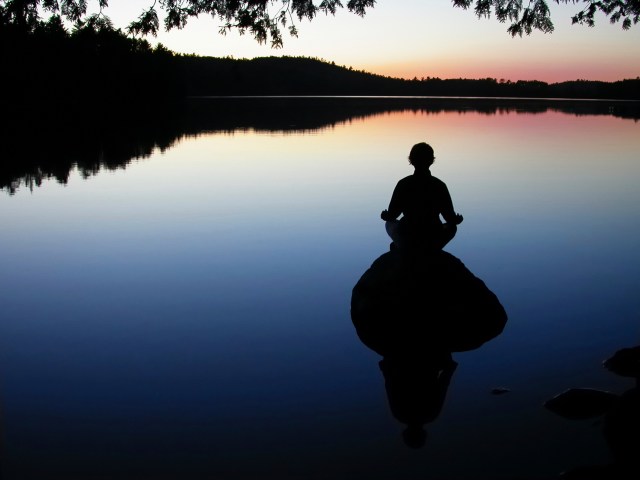
lake yoga

Relaxation
Is total peace.

When you relax completely, there is total silence. No thought enters the mind, no problems arise from the body, no memories grip the spirit. This overwhelming sense of tranquility is really all meditation is about. The neutral stillness of the mind renews the tired soul, and this is regeneration.

Even if you don’t follow a formal meditation program, it is good to sit quietly for a little while every day. This form of rest should be as regular as sleeping each day. If you can sit still and just relax completely, you are actually meditating. All the various forms of complicated techniques and visualization exist because people can’t bring themselves to this very simple state of relaxation. Their minds are constantly racing, their bodies are out of balance, and the worries of the day weigh heavily upon them. They cannot let go, so they need a formal routine to follow. But if you can simply sit down and empty yourself, you will experience a wonderful silence and a deep, satisfying sense of peace.

One should try to return to a relaxed state on a regular and periodic basis. The simple reason for relaxation is that it renews us, purifies us, and leaves us with a profound feeling of serenity. It is not a ritual. It is not a religious obligation. It is a wonderful state away from problems. In it, we are poised in our natural state.

Daily Tao / 133 – Cooper

Preparando_una_Barrica

Barrel maker planes staves to exact angles.
His shavings glow in the afternoon sun.
He joins fragrant wood together,
Fitting shoulders like building an arch.
Until the bands, there is no barrel.

There is no barrel until the cooper builds it. Until then, there are pieces of straight-grained wood, shavings, a round bottom, and metal bands, but there is no barrel. All parts are there, but they need to be composed in order to take shape. It is the same with the facets of our personalities. Until they are held tightly together as a single unit, there is no completeness, and usefulness will not be forthcoming.

Spiritual practice can be the outside order that the personality needs. While such an order can be initially restricting, perhaps even feel artificial in its arbitrariness, it is absolutely necessary. It is a means to an end. Perhaps at the end we will not need such structure, but neither will we reach the end without the means. Before we leave the image of the barrel, there is one more thing to notice about it. A barrel encloses only one thing : void. That is the way it is with us, too. All the pieces of our personality, no matter how perfectly formed, only enclose what is inside us. All spiritual practice, while it may bind us into a cohesive whole, points to the emptiness of the center. This emptiness is not nihilism but the open possibility for Tao to enter. Only with such space will we have peace.


Daily Tao / 132 – Recognition

article-0-13CED75F000005DC-639_964x631

Spokes on the heavenly wheel
Keep rotation constant.

Those who follow Tao believe that Tao progresses through phases. They apply this principle to all levels of their outlook, from cosmology to the stages of growth in a person’s life. On the macrocosmic level, they point to the rotation of the stars as evidence of smooth progression. In a person’s life, they recognize the stages of aging beginning with childhood and ending with death.

Each one of us must go from phase to phase in our development. If we stay too long in one stage, we will be warped or stunted in our growth. If we rush through a stage, then we will gain none of the rewards or learning experiences of that phase. Subsequent growth will be thrown off-balance; we will either have to go back and make it up, or, in the cases of experiences that can never be repeated, lose out on them forever. The proper discerning of these transitions is essential.

As we go through our various stages in life, it is important to mark the shift from one stage to another. Recognition is very important. We must understand that we are leaving behind one part of life and entering another. Sometimes, we mark this with a rite of passage such as graduation or marriage. At other times, it may be a personal declaration made privately. Whatever the reason, it is important to know exactly when to close one phase and when to open the next. That is why it is said that one counts the spokes on the heavenly wheel as it turns : It is the measure of our lives.


Daily Tao / 131 – Meaning

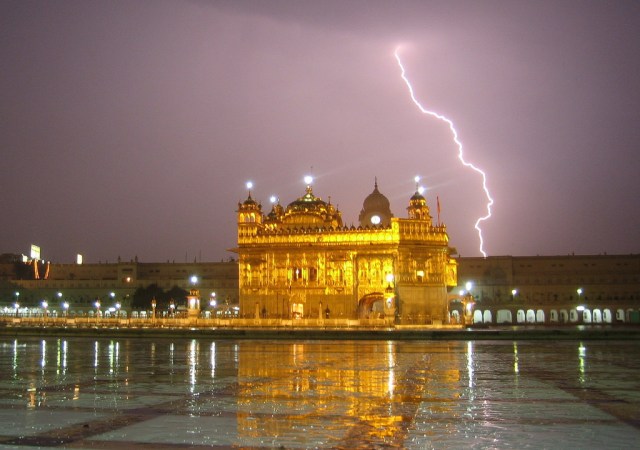
golden-temple-lightning

Lightning tears temple asunder.
Divine wrath, or natural disaster?

There was a seaside temple in India that was struck by lightning. That minor storm was the vanguard to a full hurricane that eventually ravaged the entire countryside. The old temple was split from its roof line to its foundations. One entire end of the building was parted from its body like a severed head. Was this karma? Was this the punishment of the gods? Or was it simply an old building and an unfortunate accident?

What you say shows your attitude about nature, reality, and whether you believe gods intervene in human affairs. If you insist that there was some reason that lightning cleaved the temple, then you live in a world where uncertainty is the by-product of some supreme being’s emotional whims. If, however, you accept this incident solely as a natural disaster, then you also accept random occurrences in life. Such a viewpoint does not preclude any notion of the divine, of course. It merely states that not everything in nature is administered by some heavenly bureaucracy.

It is a simple fact that lightning split the temple. The meaning of this incident — if there is any — is determined by each person. One person regards it as a disaster, another as a good thing, while a third views it dispassionately. There is nothing inherent in the incident that dictates its meaning. It is enough that we all recognize that it happened.