Daily Tao / 361 – Purity

purity-holy-lovely-evening

Purity is light.

We forget purity too much. We make compromises with our hygiene in the name of expediency. We allow our mountains and seashores to be polluted for the sake of the marketplace. We allow our minds to be sullied with frivolous entertainment. War is thought to be a viable option, principle is considered a negotiable quality, our children are victimized by strangers, and obscenity is considered a valid subject for art.

Where is the purity in our lives?

We marry. We divorce. We don’t care whom we hurt in life. We think loyalty is a charming but meaningless virtue. We sacrifice the values of our youth to purchase the glory of our later years.

Where is the purity in our lives?

We think that if we can triumph in one golden moment, that will dissolve all the other filth we preoccupy ourselves with. We uphold the greatness of athletes who want to have that one moment of triumph. We laud the battlefield hero as the redeemer of our guilt over the horror of war. We have fostered madmen who think that shooting a gun, hunting down animals, committing suicide, or slashing prostitutes in the street is their means of purity.

Where is the purity in our lives?

Seek purity. It may not be easy. It may not be common. But it is the one state that we can attain that is without compromise.

Daily Tao / 360 – Ending

Yellow-Vase-Daisies-Window-HTOURS0706-de


A shadow edge is never on the edge.
The time to contemplate the ending is before the ending.

Five days left to this year. There will be an ending. And there will be a new beginning. That is Tao.

If you look at a vase by a window and examine what makes it appear round, you will see a shadow on it. That is the shadow edge. It is the darkest shadow on that face. It is never on the edge : The main light source strikes the vase on one side, and reflected light comes from the other.

In the same way that the shadow edge, which establishes the roundness of an object to our eyes, is never at the edge, so too should we consider limits and endings before we reach them. We cannot do without limits and endings. They bring definition to our endeavors. But if we are to use them to our advantage, we have to plan how to meet them. For those who follow Tao, those who can accommodate endings gracefully are among the most admired.

In the past, emperors, scholars, holy people, or others who were fully in touch with themselves could know the moment of their deaths. While they were still vital, they wrote farewell poems. Such people knew how to consider endings before they reached them. Therefore, there were no regrets or lingering ramifications once they passed. The purity of the next cycle was ensured.

Daily Tao / 359 – Sanity

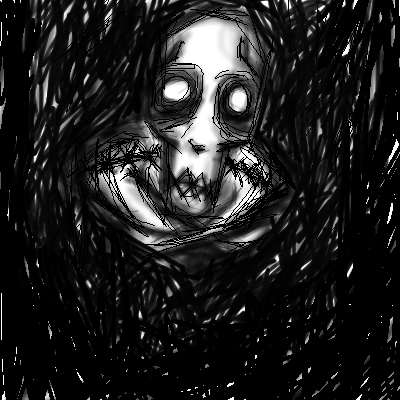
Sanity_by_Skarsnik

You are demons.
You are darkness.
Your soul is at stake. Your soul is light.
Dissipation is the threat.
Don’t surrender the key. Just dissolve.

The problems of humanity are not metaphysical. They are personal. Damnation is in you. So too is salvation. You are the prince of darkness. You are also the prince of light. Neither can be cast out of yourself. The valiant coping with that dichotomy is the poignancy of this existence.

The momentum is in favor of darkness. Glory is in favor of light. If you do nothing, you slip toward darkness. If you give the least bit of effort toward the light, you will be helped. Struggle for the light. For the price is dissipation — of the soul, of the mind, of the body, of your very humanity.

The key to all of this is your sanity. You have to struggle to maintain it. It mediates between the light and the dark.

If you want an end to the duality, you must dissolve your sanity into the universal whole. Don’t do this until you are ready, for you cannot come back. There is a tremendous difference between the dissipation of making no effort, and the dissolution that one can accomplish as one’s crowning spiritual act.

Daily Tao / 358 – Collectivity

Mass-Society

Ancient societies were tribal;
The group did the thinking.
Current society is splintered;
The individual must be complex.

People from old traditions were often less complicated because they had the advantage of a complete culture that did the thinking for them. Everyone had a role that fit the whole. Individuals could concentrate on fulfilling their place, confident that the other needs would be met by the collective.

The specialization of modern times calls for individual roles that do not necessarily form a whole. We often lose sight even of what the whole is. We have commentators, we have critics, but we do not have leaders. We celebrate egalitarianism and consensus, but it is phony : a chaos of voices rather than a democracy; a populace of individuals pursuing their own ends rather than a collective.

The burden thus falls on the individual to fulfill a tremendous range of functions. We have to make more choices, be more informed, act in a wide variety of areas. We cannot simply concentrate on doing our part, because now our part is to compete with everyone else.

Spirituality is more difficult today. In the past, you could become a spiritual aspirant and the people would support you; a holy person was just as much a part of the collective as a farmer. Now, to be a holy aspirant you have to look for your own job and find new ways through a society that barely recognizes the spiritual.