Daily Tao / 35 – Utilization

kite-picture

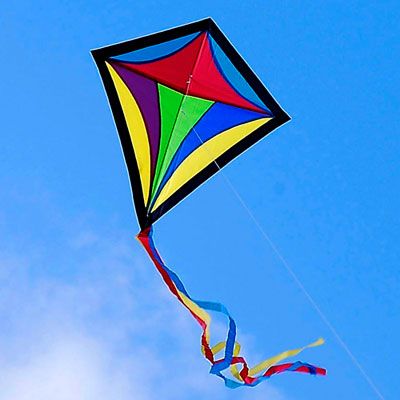
Kites harness the force of the wind.
They express our intent,
But they cannot change the wind.

A person with a kite can make it dip, turn, and flutter at will. An expert can even use a fighting kite and engage another’s until one is cut loose. It’s fun flying a kite, feeling the gigantic tug on the end of your line. Sometimes the wind is so strong that it will nearly lift you off the ground. When you harness the forces of nature, you harness something quite powerful.

This is an example of the proper utilization of Tao. It is taking advantage of natural forces. It means accepting the way they work, and then finding a way to borrow their power. It does not mean trying to change or circumscribe things. If the wind is not blowing our kite the way we want, we cannot change it. We can only borrow its energy. When initiative and natural forces are combined, there is true harmony.

Daily Tao / 34 – Engagement

African Lion (Panthera leo) female camouflaged in tall grass, Serengeti National Park, Tanzania

Prey passes the tiger who
Sometimes merely looks,
Sometimes pounces without hesitation,
But never fails to act.

Life is a constant series of opportunities. If we don’t reach out for things, if we don’t take advantage of what comes our way, then we cannot be in harmony with the essential nature of life.

The tiger is the same way. He conforms to every situation that comes. If he spots prey and is not ready to hunt, he will let it go. But he has not failed to act. He has knowingly let the prey escape, and this is much different from someone who loses a situation through slow reflexes or inability. When the tiger wants his prey, he pounces upon it without any thought or hesitation. There are no morals, no guilt, no psychological problems, no ideologies to interfere with the purity of his action. This undiminished grace in action is called nonaction.

This is engagement. Whatever comes to you, you must engage it somehow. You receive it, you may alter the circumstance and let it go, you may interject something of your own into it, or you may knowingly let it pass. Whatever you do, there is no need to be apathetic toward life. Instead, full participation in all things is the surest way to happiness, vitality, success, and a deep knowledge of Tao.

Daily Tao / 33 – Defense

templarofbacon_office-demons

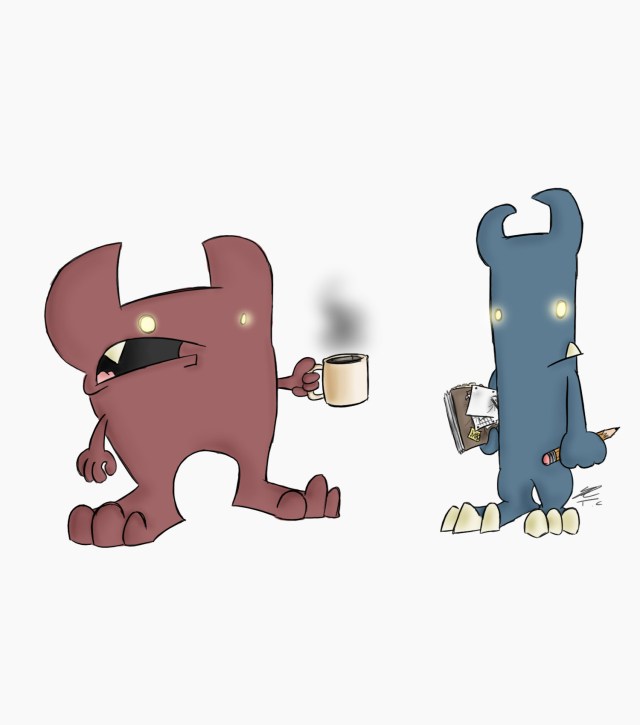
Demons who enter your circle
Must be pushed out.

No matter what world you walk in — office, school, temple, prison, or the streets — there is an underworld populated with demons. These are people who are avaricious, aggressive, sadistic, and cynical. They not only take advantage of others without compunction, they delight in it. They find pleasure in seeing others suffer.

The why of it cannot be answered. There is only the fact, with no metaphysical meaning or other ramifications. It is not karma, it is not fate. If these people decide to attack you, it is circumstance. You must fight or be mowed down.

Compassion and humility may be among the most treasured of human virtues, but they are not useful in conflict. A beautiful gold statue of your most adored god is a treasure, but you would not use it as a weapon. Virtue is to be value in the proper context; only a sword will do in battle.

Whether an attack is physical — assault, rape, murder — or whether it is mental — business intrigues, emotional abuse — you must be prepared. It is best to prepare for conflict by learning as much self-defense as possible. You will not become a bully or a monster, but instead, you will learn that you an respond to any situation. If you are never attacked, that will be wonderful. Training will still help you work out your fears, inhibitions, and anxieties. In the case of conflict, no one, not even a veteran, is ever sure that they will come out alive from a confrontation. But they resolve to go in there and give themselves a fighting chance. This in itself is a triumph over evil.

Daily Tao / 32 – Ubiquity

Stables_1399542c

Tao is everywhere.
It cannot be kept from the sincere.

Tao originated in China and was an expression of that culture. It was intimately tied to a poetically agrarian view of the world, and it forged mysticism and pragmatism together. But now, most of us, even those in China, do not understand ancient words. Our farming is mechanized. Our poetry is written on computers. Does this make Tao invalid? No, it does not. Tao is still here, and if we are to follow Tao, we must rely not on old standards but on direct experience. Contemporary minds need contemporary concepts to interest them.

If following Tao is as great as the masters claim, then it ought to be applicable to any situation and any race. Neither time, nor place, nor culture should be a barrier to the sincere seeker. Tao surrounds us; we need only guidance and understanding in order to connect with it.

Tao is not something esoteric. It is right here. The masters allude to this all the time. For them, anything — from reading scriptures to attending the theater, from meditating to sweeping dung from the ground — is Tao. They understand the ubiquitous nature of Tao and act accordingly. If masters still know Tao in this world of jet planes and electronic communication, then we can also absorb the essential message of Tao. Those who succeed might never talk of it, and yet everything they do will be spontaneously in tandem with Tao.

Daily Tao / 31 – Orientation

space-the-sky-the-galaxy-stars-Favim.com-481975

Planets orbit the sun.
Forms orbit the mind.

Most of us embody disparate aspects in our personalities; these are our forms, the way we take shape. If we aren’t careful, we can become confused by such complexity. We should not deny any part of ourselves. We should arrange them. All elements are valid — they must simply be placed in the right context.

Those who follow Tao understand that a diverse personality is problematic only if some aspects dominate to the exclusion of the others. This is unbalanced. If there is constant alteration between all aspects, then equilibrium is possible. Like the planets, feelings, instincts, and emotions must be kept in a constantly rotating order. Then all things have their place and the problems of excess are avoided.

Just as the sun is at the center of our solar system, so too must the mind of wisdom be the center of our diverse personalities. If our minds are strong, then the various parts of our lives will be held firmly to their proper courses, and there will be no chance of deviation.

Daily Tao / 30 – Lovemaking

two-men-kissing-in-b-w

Nocturnal downpour
Wakes the lovers,
Floods the valley.

Making love is natural. Why be ashamed of it?

That seems simple, but it is actually a great challenge in these complex times. Too many other layers of meaning have been imposed upon sex. Religions straitjacket it, ascetics deny it, romantics glorify it, intellectuals theorize about it, obsessives pervert it. These actions have nothing to do with lovemaking. They come from fanaticism and compulsive behavior. Can we actually master the challenge of having lovemaking be open and healthy?

Sex should not be used as leverage, manipulation, selfishness, or abuse. It should not be a ground for our personal compulsions and delusions.

Sexuality is an honest reflection of our innermost personalities, and we should ensure that its expression is healthy. Making love is something mysterious, sacred, and often the most profound interaction between people. Whether what is created is a relationship or pregnancy, the legacy of both partners will be inherent in their creation. What we put into love determines what we get out of it.

Daily Tao / 29 – Scars

marks-in-brown-clay

Markings in dry clay disappear
Only when the clay is soft again.
Scars upon the self disappear
Only when one becomes soft within.

Throughout our life, but especially during our youth, many scars are inflicted upon us. Some of them are the results of violence, abuse, rape, or warfare. Others arise from bad education. A few come from humiliation and failure. Others are caused by our own misadventures. Unless we recover from these injuries, the scars mar us forever.

Classical scriptures urge us to withdraw from our own lusts and sins. But scars that have happened through no fault of our own may also bar us from spiritual success. Unfortunately, it is often easier to give up a bad habit than to recover from the incisions of others’ violence. The only way is through self-cultivation. Doctors and priests can only do so much. The true course of healing is up to us alone. To do this, we must acquire many methods, travel widely, struggle to overcome our personal phobias, and perhaps most importantly of all, try to acquire as few new problems as possible. Unless we do, each one of them will bar us from true communion with Tao.

Daily Tao / 28 – Accountibility

book

A father without a father
Has difficulty balancing.
A master without a master
Is dangerous.

We look up to our parents, our teachers, and our leaders with trust and expectation. Their responsibility is to guide us, educate us, and even make judgments on our behalf when circumstances are uncertain. Ultimately, they are to bring us to the point where we can make our own decisions, based on the wisdom that they have helped us develop.

But the potential for abuse and mistakes is very great. What person can be right all the time? A simple lapse at the wrong time can cause confusion, psychological scars, and even great disaster. Harsh words during a child’s impressionable moments can engender years of problems. That is why we need a parent for the parent, a master for the master, and leaders for the leaders. This prevents errors of power. In the past, even kings had wise advisers. Every person who would be a leader should have such assistance.

Eventually, someone has to be at the top. And who will that person turn to? Let us invoke not deities but pragmatism. It is experience that is the ultimate teacher. That is why wise people travel constantly and test themselves against the flux of circumstance. It is only in this way that they can truly confirm their thoughts and compensate for their shortcomings.

Daily Tao / 27 – Feasting

ARTICLEXMAS

Feasting is the flame in mid-winter
That kindles the fire of friendship
And strengthens the community.

In the past, feasting was a way to bind the community closer together. The same is true today. Whether they are cultural gatherings, times of group worship, or even special dinners with friends, we all need moments where we come together and reaffirm the importance of our group.

The cheer that we feel is essential both to the collective and the individuals involved. The affirmation of the group should not be a sublimation of the individual but rather a framework for involvement. A good gathering requires participation — the efforts of organization, work, and attendance — and in turn gives back sustenance for body and soul, a sense of belonging, and the accomplishment of something that could not be done by the individuals alone.

Like any other human endeavor, the feast is vulnerable to manipulation and politics, the selfish maneuvering of cynical individuals. This is difficult to avoid completely, for it is impossible for any group to truly be united. The only way to mitigate this is for the collective to keep its intentions strictly on its purpose, to select its leaders wisely, and for those leaders to be as enlightened as possible..

Daily Tao / 26 – Adoration

IMG_1419

Images on the altar,
Or imagined within :
We pray to them,
But do they answer?

The wise tell us how important adoration is. So we kneel before altars, give offerings, and make sacrifices. In our meditations, we are taught to see gods within ourselves and to make supplications to receive power and knowledge. This we do with great sincerity, until the masters say that there are no gods. Then we are confused.

The statue on the altar is mere wood and gold leaf, but our need to be reverent is real. The god within may be nothing but visualization, but our need for concentration is real. The attributes of heaven are utopian conjectures, but the essence of these parables is real. The gods, then, represent certain philosophies and extraordinary facets of the human mind. When we devote ourselves to gods, we establish communion with these deeper aspects.

The thought that we are worshipping symbolism may make us uncomfortable. We are educated to accept only the tangible, the scientific, and the material. We doubt the efficacy of adoring the merely symbolic, and we are confused when such reverence brings about genuine personal transformation. But worship does affect our feelings and thoughts. When the wise say that there are no gods, they mean that the key to understanding all things is within ourselves. External worship is merely a means to point within to the true source of salvation.